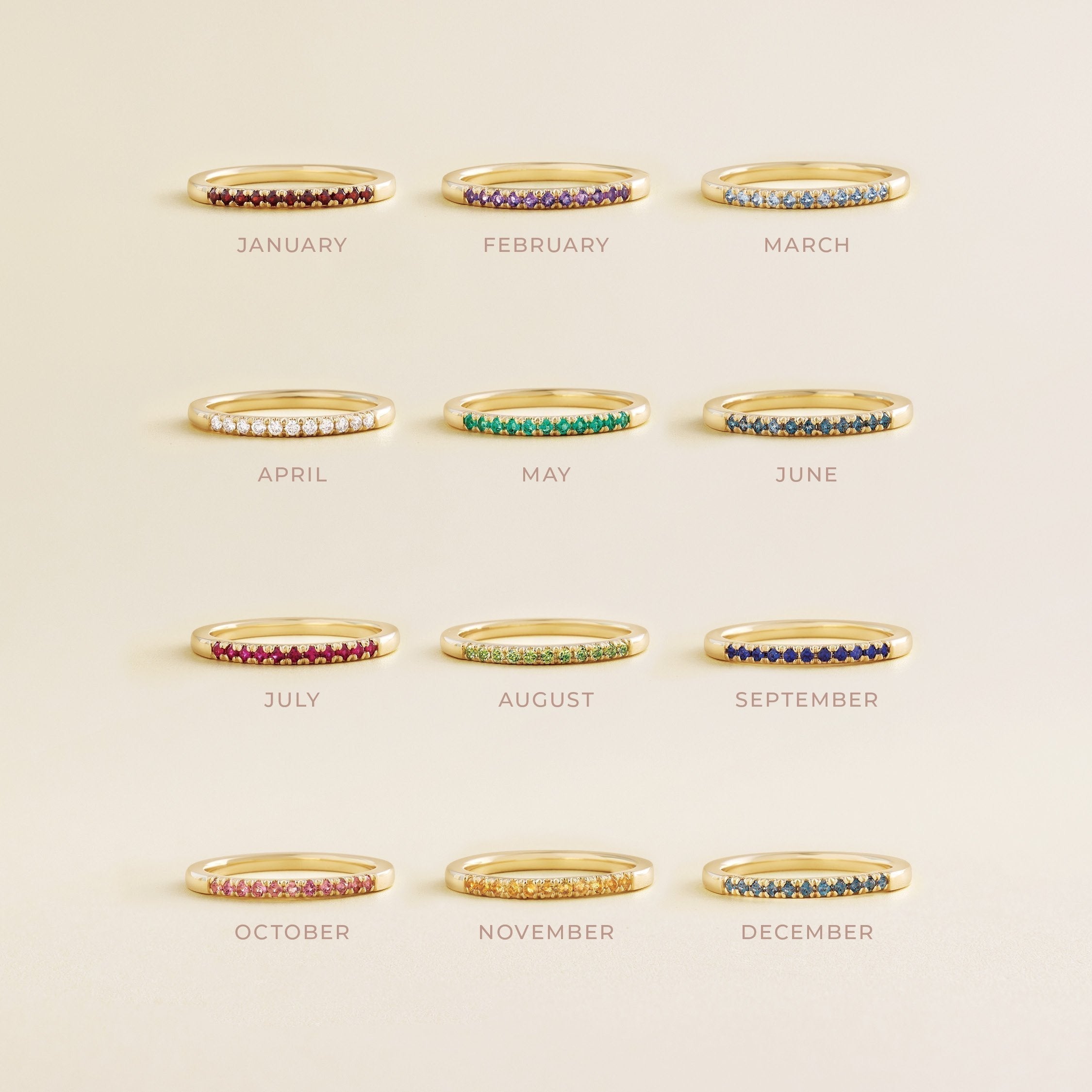

Birthstone Chart: What’s Your Birthstone by Month?
Birthstones have long been treasured for their beauty and symbolism. Whether you're celebrating a birthday, picking out a meaningful gift, or simply curious about the gemstone tied to your birth month, understanding the significance behind these gems can add a special touch to any jewelry collection.
In this guide, we’ll answer all your burning questions about birthstones, explore the dazzling world of these timeless treasures, and provide a detailed birthstone chart for easy reference.
What is a Birthstone?
A birthstone is a gemstone that represents a person’s birth month. Each stone carries its own meaning, history, and unique charm. The concept of birthstones dates back thousands of years, with roots in biblical texts and ancient civilizations. Over time, the modern birthstone chart we use today was established, offering a gemstone for each month of the year.
Birthstone Chart by Month
Here’s a quick look at the birthstones associated with each month:
-
January Birthstone: Garnet
-
February Birthstone: Amethyst
-
March Birthstone: Aquamarine
-
April Birthstone: Diamond
-
May Birthstone: Emerald
-
June Birthstone: Pearl, Alexandrite, or Moonstone
-
July Birthstone: Ruby
-
August Birthstone: Peridot, Spinel, or Sardonyx
-
September Birthstone: Sapphire
-
October Birthstone: Opal or Tourmaline
-
November Birthstone: Topaz or Citrine
-
December Birthstone: Tanzanite, Zircon, or Turquoise
But what makes each of these stones special? Let’s dive deeper.
What is the Meaning Behind Each Birthstone?
January Birthstone – Garnet
Symbolizing protection and strength, garnet is often associated with deep love and enduring relationships. Its rich, red hue is reminiscent of passion and vitality.
February Birthstone – Amethyst
Known for its calming purple tones, amethyst symbolizes peace, clarity, and balance. Ancient Greeks believed it could prevent intoxication — though we recommend enjoying its beauty responsibly!
March Birthstone – Aquamarine
With its tranquil blue hue, aquamarine captures the essence of the ocean. It symbolizes serenity, courage, and communication, making it a favorite for ocean lovers.
April Birthstone – Diamond
The ultimate symbol of strength and eternal love, diamonds are the hardest natural substance on Earth. Their brilliance and resilience make them a classic choice for engagement rings.
May Birthstone – Emerald
Emerald’s vibrant green hue represents rebirth, love, and growth. Throughout history, it has been a gemstone of royalty and elegance.
June Birthstone – Pearl, Alexandrite, or Moonstone
June babies get options! Pearls symbolize purity and wisdom, Alexandrite is known for its color-changing magic, and Moonstone evokes intuition and protection.
July Birthstone – Ruby
With its fiery red color, ruby symbolizes passion, strength, and vitality. It’s believed to bring good fortune and ward off evil.
August Birthstone – Peridot, Spinel, or Sardonyx
Peridot’s vibrant green hue symbolizes prosperity and happiness, Spinel offers resilience and revitalization, and Sardonyx is a grounding stone linked to courage and strength.
September Birthstone – Sapphire
Sapphires, often associated with loyalty and wisdom, are typically deep blue. They’re a timeless symbol of truth and sincerity.
October Birthstone – Opal or Tourmaline
Opals dazzle with their rainbow-like play of colors, symbolizing creativity and inspiration. Tourmaline, available in a variety of colors, is believed to promote healing and joy.
November Birthstone – Topaz or Citrine
Topaz is known for its vibrant golden hues and symbolizes strength and confidence. Citrine, with its warm glow, is said to bring happiness and abundance.
December Birthstone – Tanzanite, Zircon, or Turquoise
December offers an array of cool-toned gemstones. Tanzanite is prized for its deep blue-violet hues, Zircon sparkles with brilliance, and Turquoise is celebrated for its calming properties and spiritual significance.
Which Birthstone is the Most Popular?
While diamonds are often the most sought-after, thanks to their association with engagements and anniversaries, sapphires and emeralds also rank high in popularity. Ultimately, the most popular birthstone can vary depending on personal taste and occasion.
How Do I Choose the Right Birthstone Jewelry?
Choosing birthstone jewelry is a personal and meaningful experience. Here are some tips to consider:
-
Personal Meaning: Think about the symbolism behind the stone and how it resonates with you or your loved one.
-
Color Preference: Each gemstone has its own range of hues. Select the shade that appeals most to your style.
-
Jewelry Style: Birthstones can be featured in rings, necklaces, earrings, or bracelets. Pick a piece that complements your everyday look.
-
Durability: Some gemstones, like diamonds and sapphires, are more durable for daily wear, while others, like opals or pearls, require extra care.
Where Can I Find Fine Birthstone Jewelry?
At Cove Jewelry, we offer stunning, high-quality pieces featuring both classic and contemporary birthstone designs. Our carefully crafted jewelry is inspired by the beauty of the coast, using only the finest materials to ensure timeless elegance.
Whether you're celebrating a milestone or simply treating yourself, our collection has something special for every month of the year.
🌊 Ready to find your birthstone? Explore our collection and discover the perfect piece that speaks to your story.